BizOn Hackathon
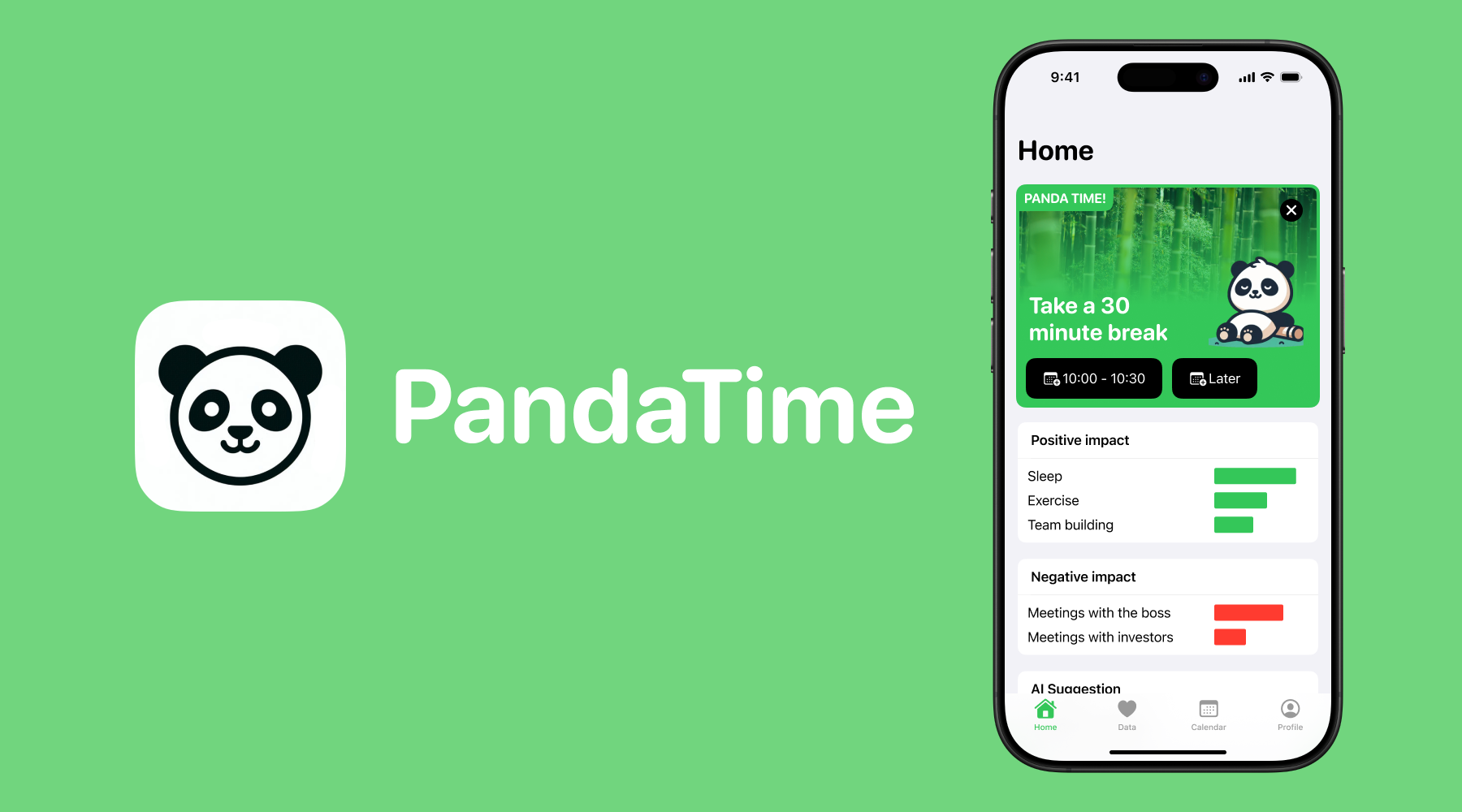
Key Outcome: We designed PandaTime, a wellness application that connects an employee work calendar with real-time health data to give automated break recommendations and reduce workplace burnout.
Context
We developed this project during a 24-hour hackathon organized by the Innovations Hub Foundation together with AstraZeneca. The competition jury awarded our solution 3rd place.
I was responsible for the UX/UI design. Our team delivered the final solution as a pitch deck that included interactive mockups, a business plan, and system architecture diagrams.
Challenge
AstraZeneca and the organizers asked teams to build a workplace solution that integrates health sensor data from wearable devices.
Office workers frequently deal with high stress and fatigue. To address this, the brief required a system that tracks continuous health signals - like heart rate, sleep quality, and stress markers - to deliver automated recommendations for breaks, flexible hours, and time off.
Competitor Audit
We evaluated competitor applications across two dimensions: activity focus versus mental well-being, and isolated tools versus integrated user collaboration.
- Mental Well-Being & Counseling Tools (Mindgram, Hearme): These platforms provide employee support and psychological care. But they do not synchronize with work schedules and do not track physical activity.
- Activity & Habit Platforms (Personify Health, Burnalong, WellSteps, Activy, YuMuuv, Challenges): These platforms offer gamified team challenges and activity logs. But they do not read live calendar availability and they require manual user inputs.
Key Finding: None of the competitor teams or existing products combined wearable health data with employee work calendars. Other solutions require manual data entry.
Solution
We created PandaTime - a schedule-aware wellness application that connects directly to corporate calendars and biometric health hardware.
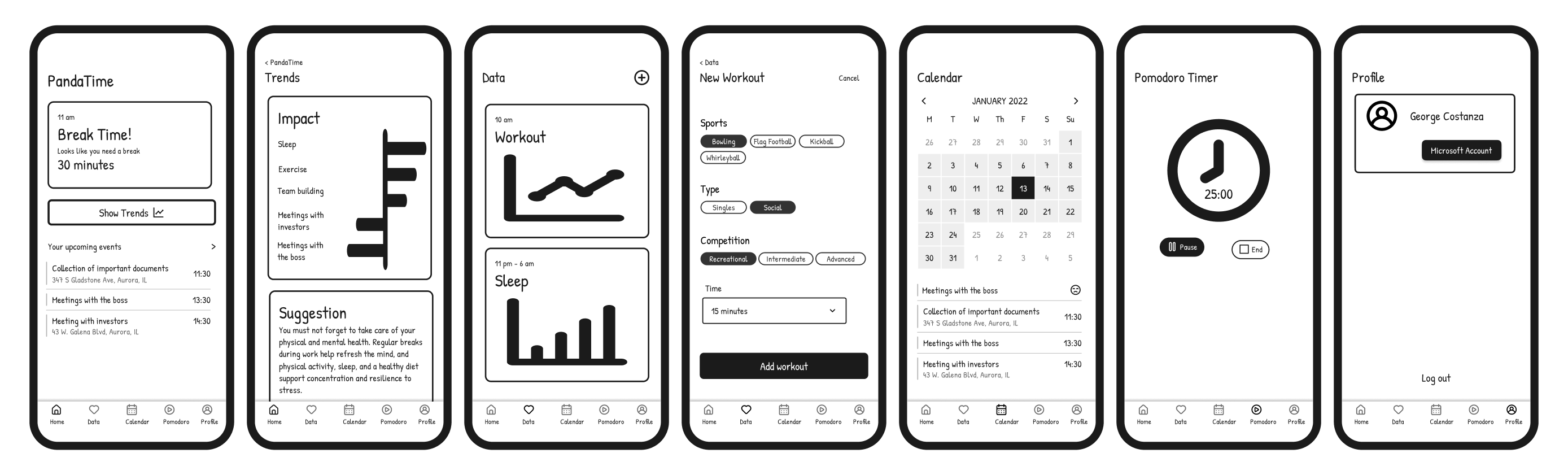
Our concept was unique in the competition. While other teams focused only on wearable hardware, our team integrated existing work calendar data to provide valuable insignt, without manual data input.
The system uses Large Language Models (LLMs) to parse calendar events and correlate them with health sensor data. For example, the system can identify if a meeting with a specific person increases stress, or if a high number of daily meetings increases stress.
The application synchronizes in real time with tools such as Google Calendar, Microsoft Outlook, Slack, Jira, and Microsoft Teams. Because the platform reads health signals and calendar data automatically, it removes user input barriers.
Core Features
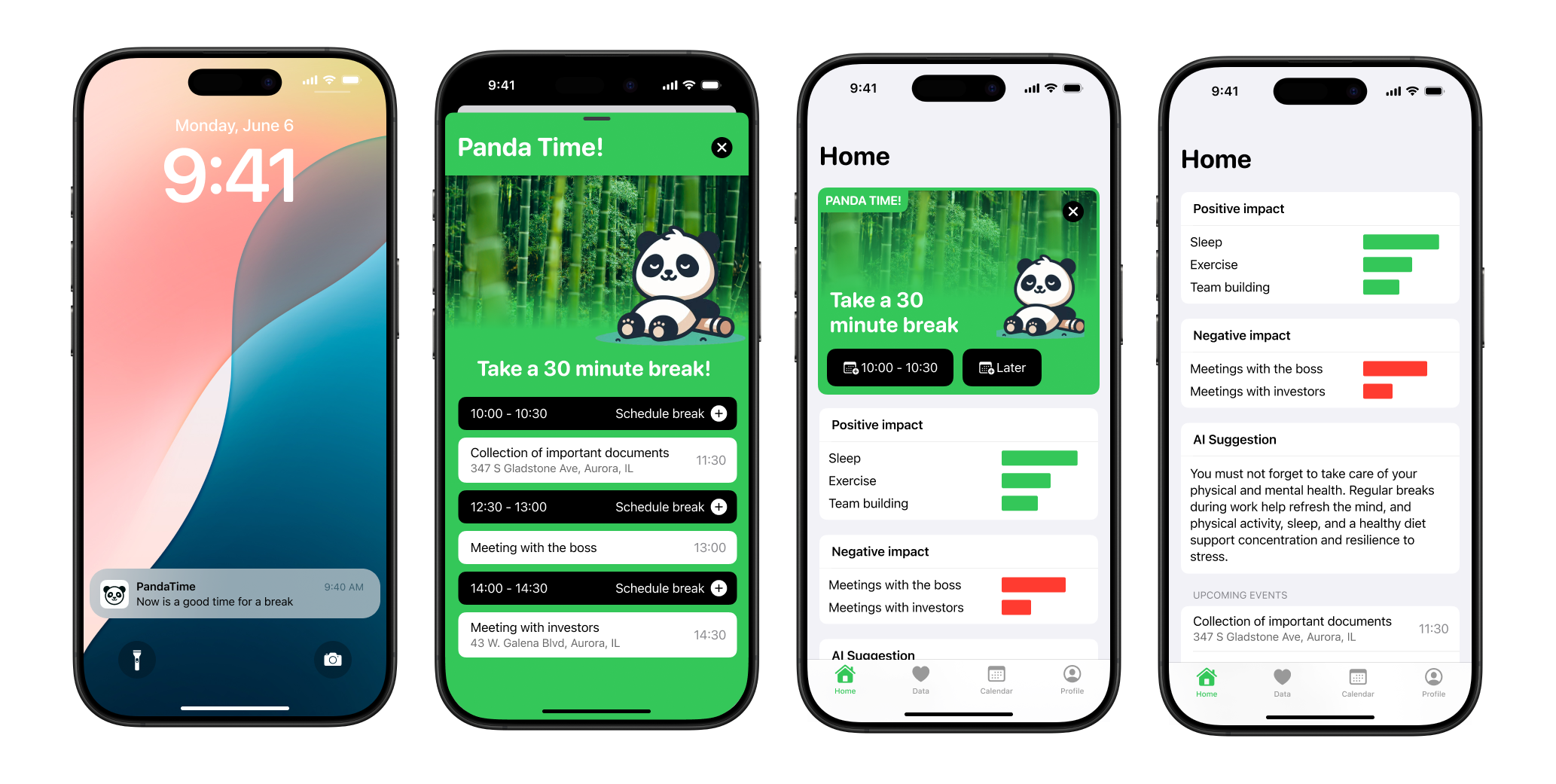
Contextual Break Notifications:
- Analyzes live calendar events and biometric stress indicators to recommend 30-minute breaks during optimal schedule gaps.
- Lets users schedule breaks immediately or delay recommendations to later times.
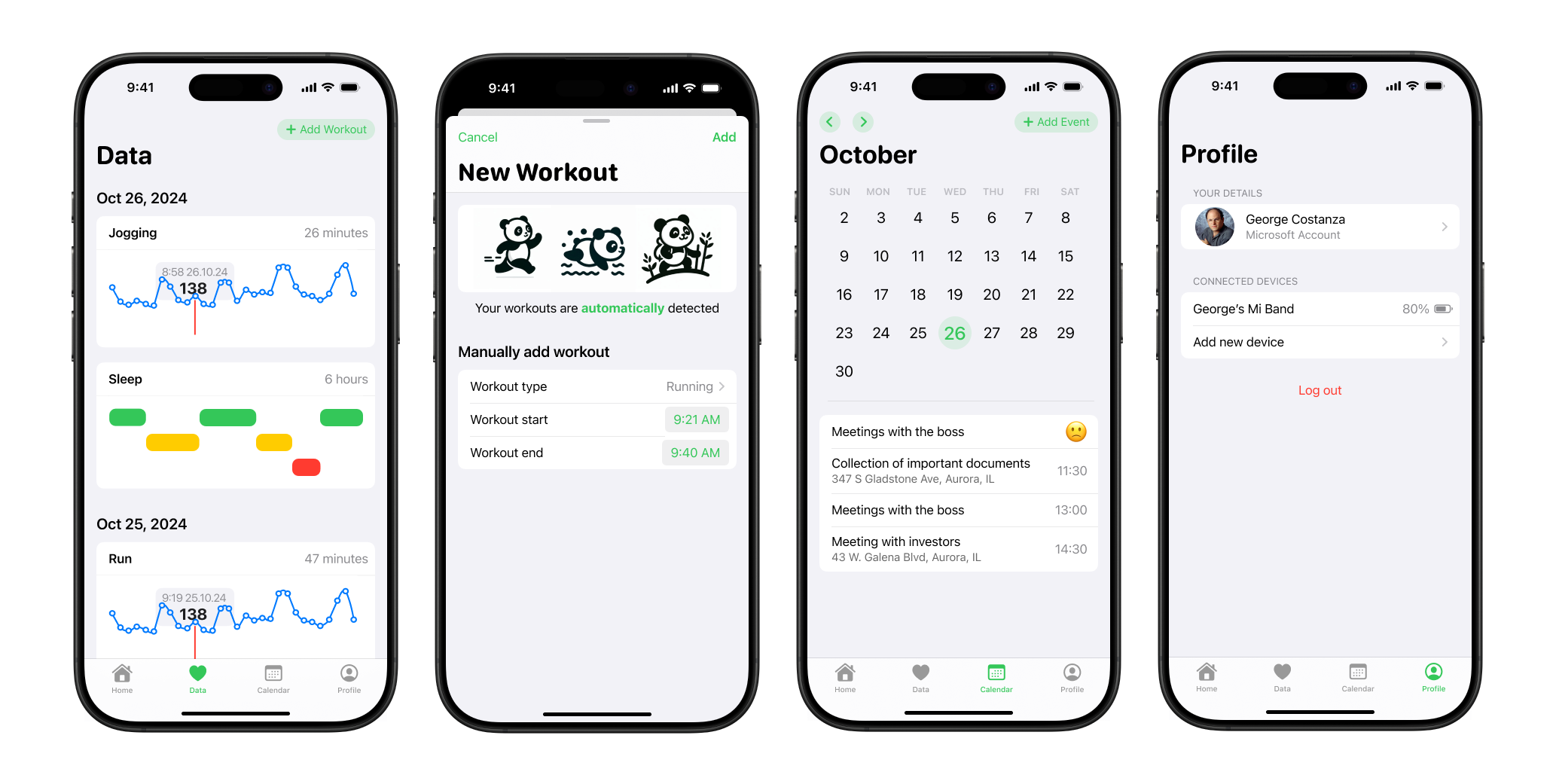
Biometric Health Tracking:
- Collects multi-sensor metrics including heart rate, heart rate variability, respiratory rate, blood oxygen saturation, blood pressure, and sleep duration.
- Connects wearable devices (Apple Watch, Garmin, Mi Band) to employer-supported accounts.
Impact Analysis & Event Logs:
- Correlates specific meetings (e.g., manager reviews, client presentations) with physical stress increases through LLM analysis.
- Highlights positive factors (sufficient sleep, exercise) and negative factors (excessive meetings, high-stress interactions).
- Integrates with workplace productivity metrics when available to show performance correlations.
Anonymized HR Insights:
- Generates aggregate organization-level reports for HR teams to monitor company-wide well-being trends and meeting density.
- Integrates directly with HR management software such as Workday and Comarch.