Real Estate Hackathon
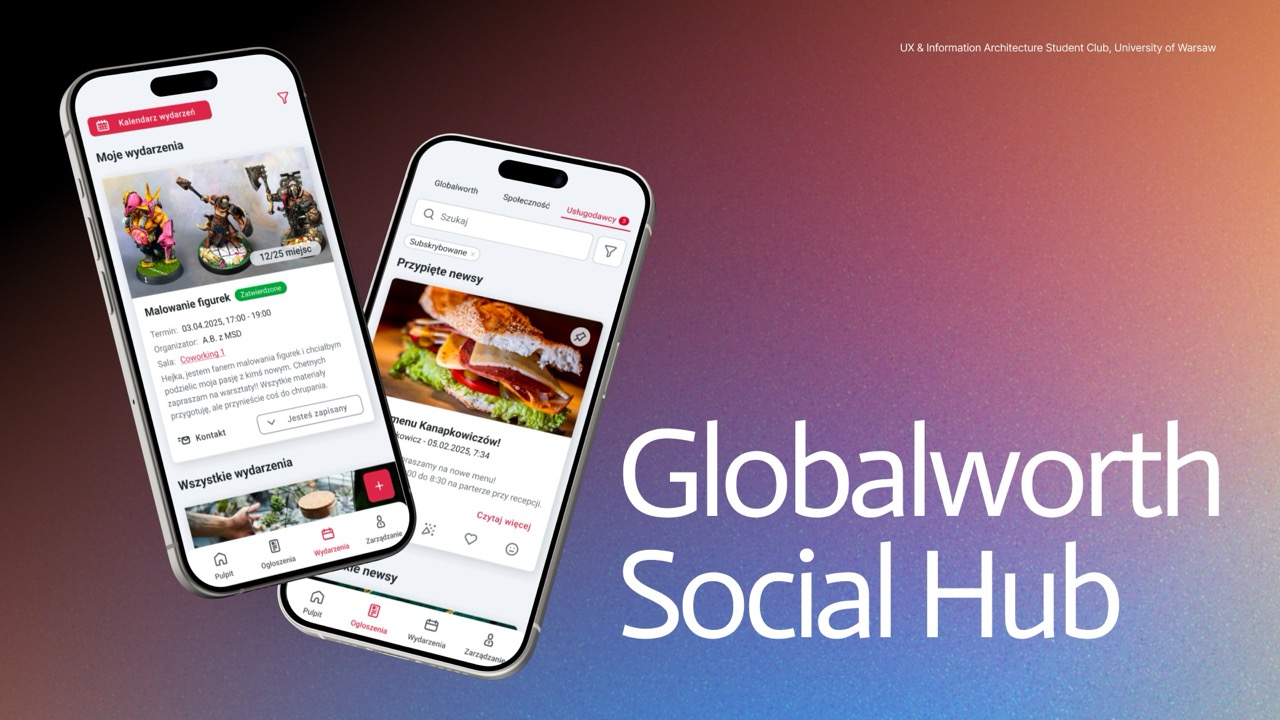
Key Outcome: We designed Globalworth Social Hub. This feature adds a community module to the existing Globalworth tenant application. The concept changes physical office buildings into active local communities. It lets workers host events, post announcements, and easily access lobby vendors.
Context
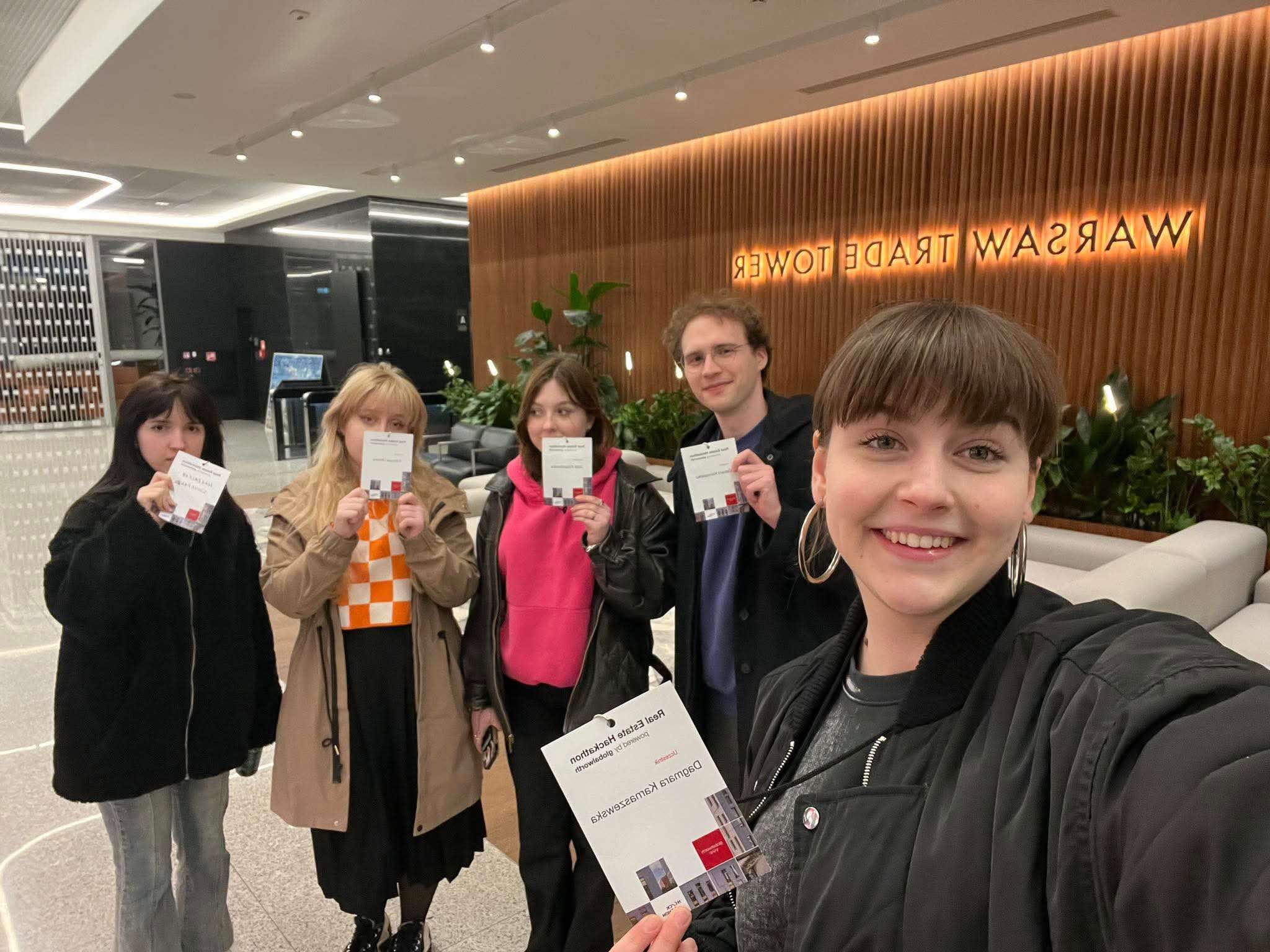
We developed this project for the Globalworth Real Estate Hackathon. We worked on the Future of workspaces challenge.
I was the team leader of a 5-member team from the UX and Information Architecture Student Club at the University of Warsaw. I managed the project, led ideation workshops and contributed to both research and design.
Challenge
In the Future of Workspaces track, we addressed the challenge of low office attendance in hybrid work models.
When companies adopted hybrid work models, building operators faced high vacancy risks. Workers stayed home because physical offices lacked social value and community connection.
Additionally, the organizers wanted all participants to try out their tenant app and consider how our solutions could be integrated with it.
This led us to target a two-part problem:
- Workers feel isolated at home, but they lack motivation to commute to an office where they simply sit alone at a desk.
- Existing tenant applications focus only on administrative tasks such as door access and desk booking. Because of these limited features, apps like that struggle to gain user traction.
Competitor Audit
We evaluated 13 direct and indirect competitor platforms:
- Direct Competitors (Hellopark, BlueBolt, Whirla, URVE Smart Office, RONSPOT, Play Spot, myhive): They focus on functional operations like turnstiles, parking, and room reservations. They work as top-down management tools without social features.
- Indirect Competitors (Moniti, KanapkaMan, VergeSense, Density.io, Smart Home Systems): They provide specialized tracking, food ordering, or environmental sensors. However, they work alone without building a community.
User reviews for the existing Globalworth App showed that users liked the clean user interface. However, they requested visual floor maps and flexible hourly parking allocation.
User Interviews
Before the hackathon, as preparation and to build context around the challenge, we conducted 8 In-Depth Interviews (IDIs) with office workers.
- Open-space noise causes mental fatigue. Private phone booths are often fully booked.
- Central heating and cooling systems cause physical discomfort. For example, office temperatures are too cold during summer.
- Employees feel isolated when they work on nearly empty floors without knowing if their team is present.
- Workers regularly miss real-time local updates. For example, they do not know when daily food vendors (e.g. "Mr. Snail") arrive in the lobby.
The interviews showed us a broad range of workplace issues. For this project, the final two findings were most relevant: they connected directly to the challenge of increasing office attendance and to the opportunity to make the tenant app more useful.
Desk Research
We analyzed industry reports and academic studies to select data that directly guided our product design. The data revealed three main requirements for our solution:
- 83% of employees will visit the office more often if the building offers social and community experiences. Gensler Research Institute (2022)
- 74% of employees feel disconnected due to weak internal communication, while 85% feel more motivated when they receive regular updates about their workspace. Gallup (2014) and Happeo Intranet Study (2024)
- Having a trusted colleague at work doubles employee engagement and advocacy, increasing advocacy from 21% to 44%. Polish Academy of Sciences (2022)
These findings led us to think of offices more like social spaces than just buildings. Globalworth's buildings bring many offices and coworking spaces together. We saw an opportunity to help people from different companies connect, not just colleagues from one company.
Ideation
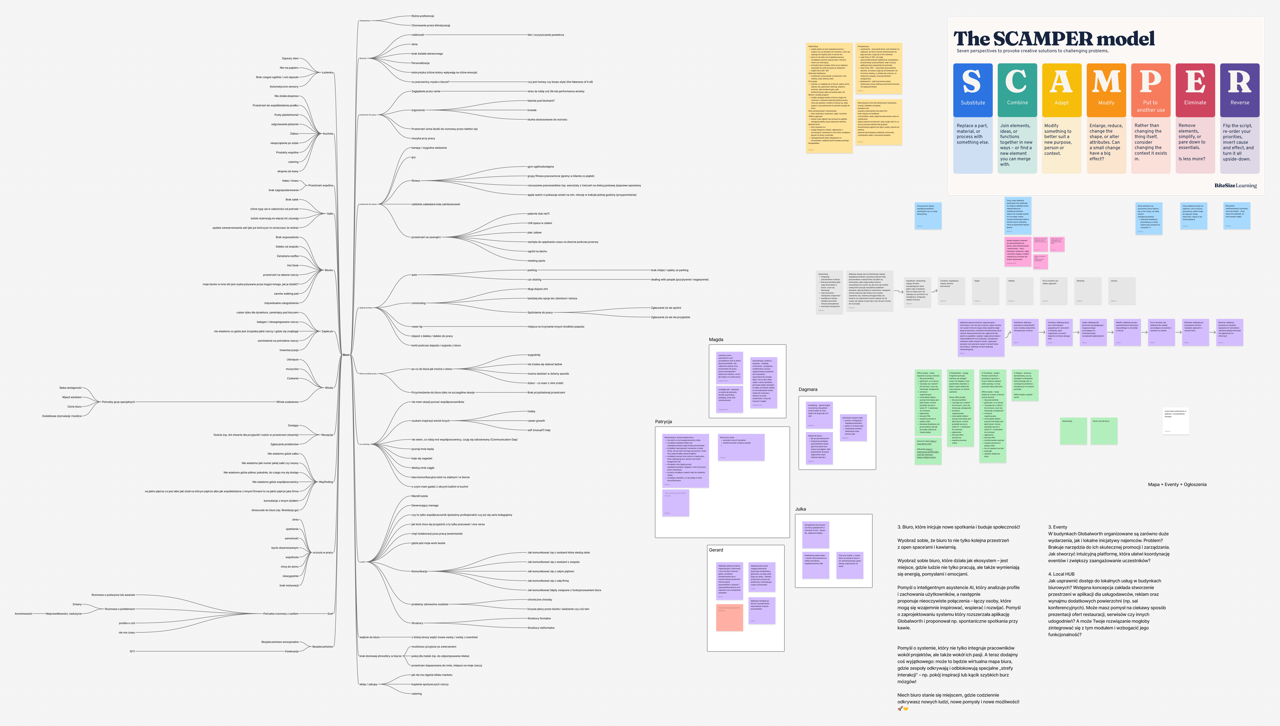
During the hackathon, I led structured workshops to turn research data into practical solution concepts:
- Mindmapping: Grouping pain points into spatial comfort, commute logistics, wellbeing, and social communication.
- 6-3-5 Brainstorming: Each team member wrote 3 ideas every 5 minutes to create many potential feature concepts.
- SCAMPER Framework: Systematically changing existing Globalworth features.
- Impact-Effort Matrix: Prioritizing high-impact features that are easy to build.
Solution
We created Globalworth Social Hub - an extension module inside the main Globalworth tenant application. It transforms commercial office buildings from static work locations into active local communities ("Globalworth, local community"). We decided to not build a new separate application. Instead, we used their existing application as our starting point. We focused on feasability and user benefit - making our solution easy to implement, cost-effective, and practical.
Core Features
Bottom-Up Community Events:
- Lets any employee organize informal events like board games, crafting, sports groups, or DIY plants in shared building spaces.
- Removes corporate approval barriers and creates organic connections between companies.
- Includes RSVP limits, calendar synchronization, and automated reminders.
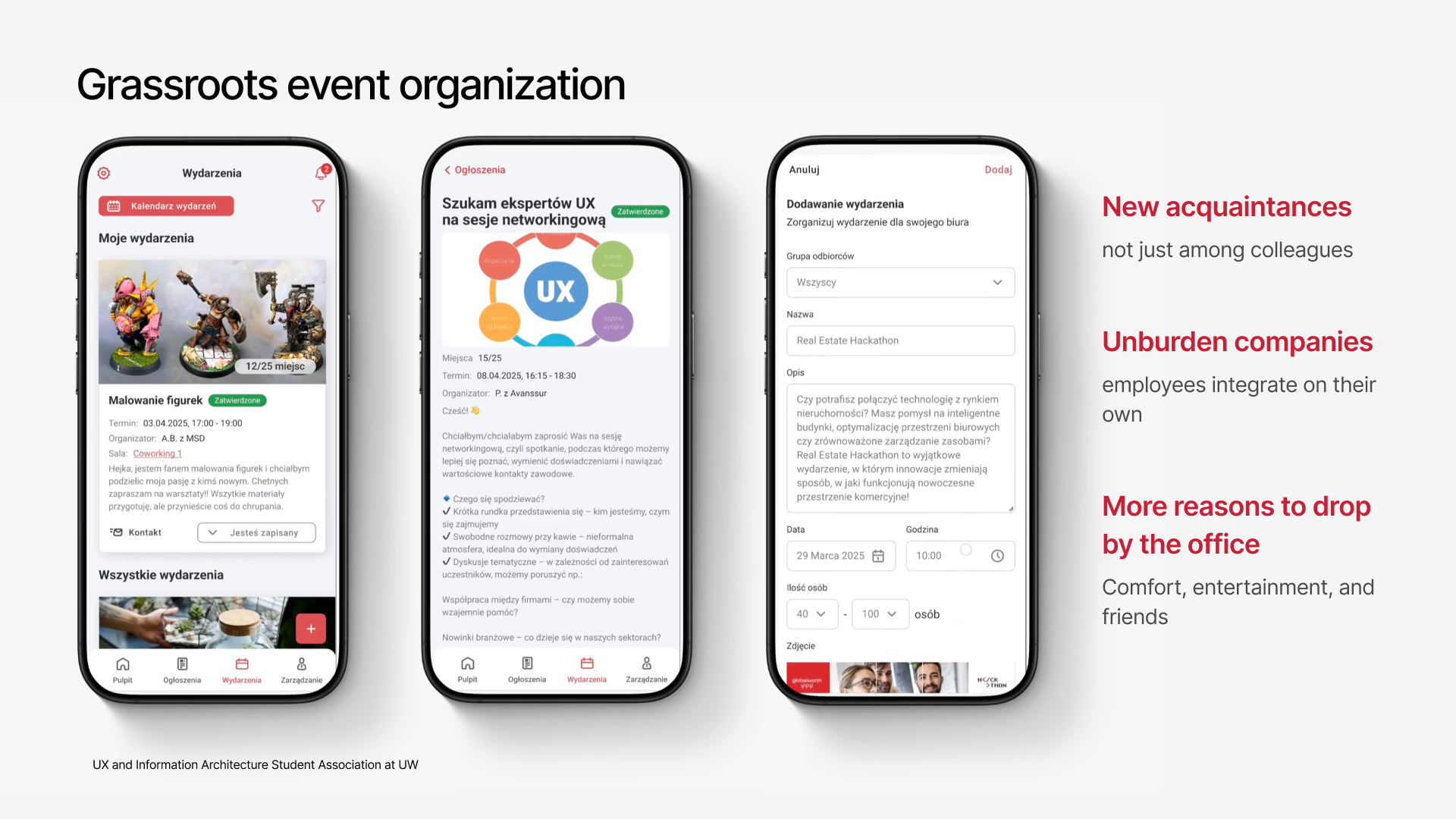
Democratized Announcements:
- Building News: Important alerts like elevator maintenance.
- Local Vendor Hub: Direct notifications from local services and lobby vendors. Examples include sandwich vendor arrivals, cafe discounts, and dry cleaning services.
- Spotted & Community Board: Lost and found posts, informal worker polls, and interest group messaging.
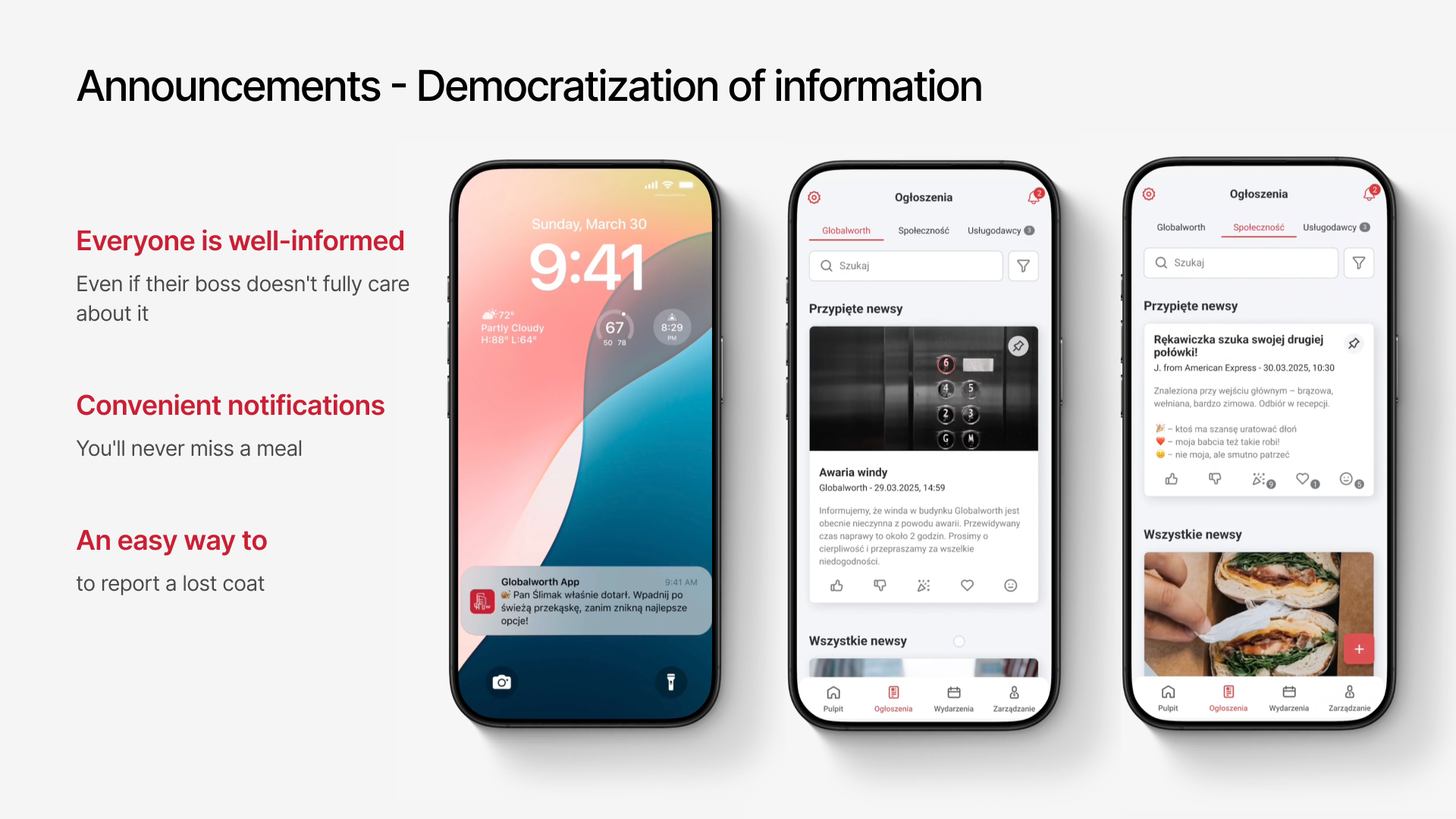
Core Utility Integration:
- Keeps essential access control features like gate unlocking, turnstiles, elevator access, and desk or parking booking.
- Places social updates directly on the main dashboard.
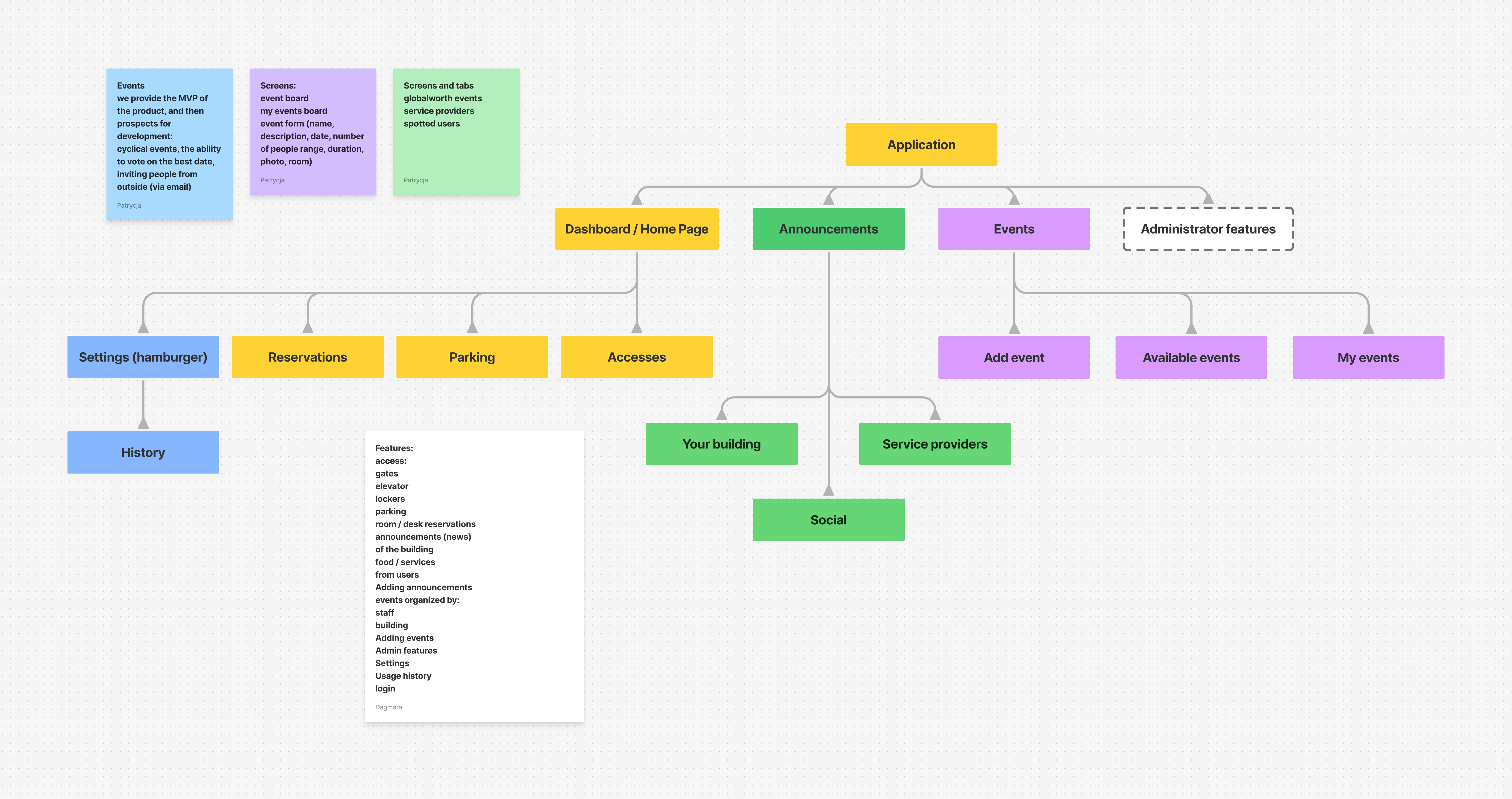
Information Architecture
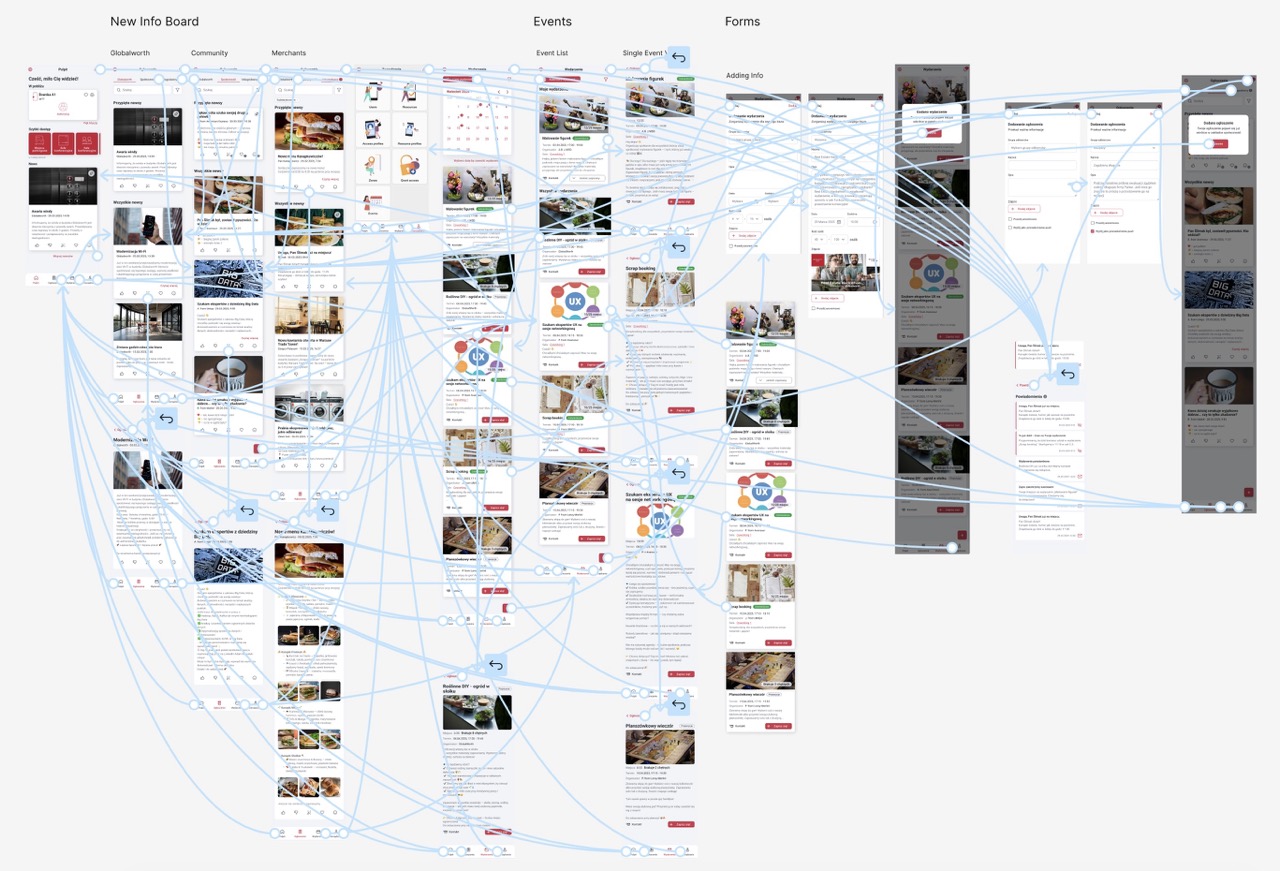
Figma Prototype
Lessons Learned
After the competition, I led a structured team retrospective to evaluate our process and results. This led us to multiple learnings:
-
Early Stakeholder Engagement: Interview competition jury early to learn the real evaluation criteria.
-
Rapid Ideation Transitions: Set strict time limits on ideation frameworks like SCAMPER. Spending too much time on them has diminishing returns.
-
Pre-Assembled Design Systems: Prepare UI component libraries before hackathons or use pre-existing libraries.
-
Product-First Pitch Balance: Spend at least 50% of pitch time on live product demonstrations and interactive prototype flows instead of background research metrics.